Adaptive Interfaces: Custom Controls Reshaping Accessibility in Instant-Play Strategy and Racing Titles
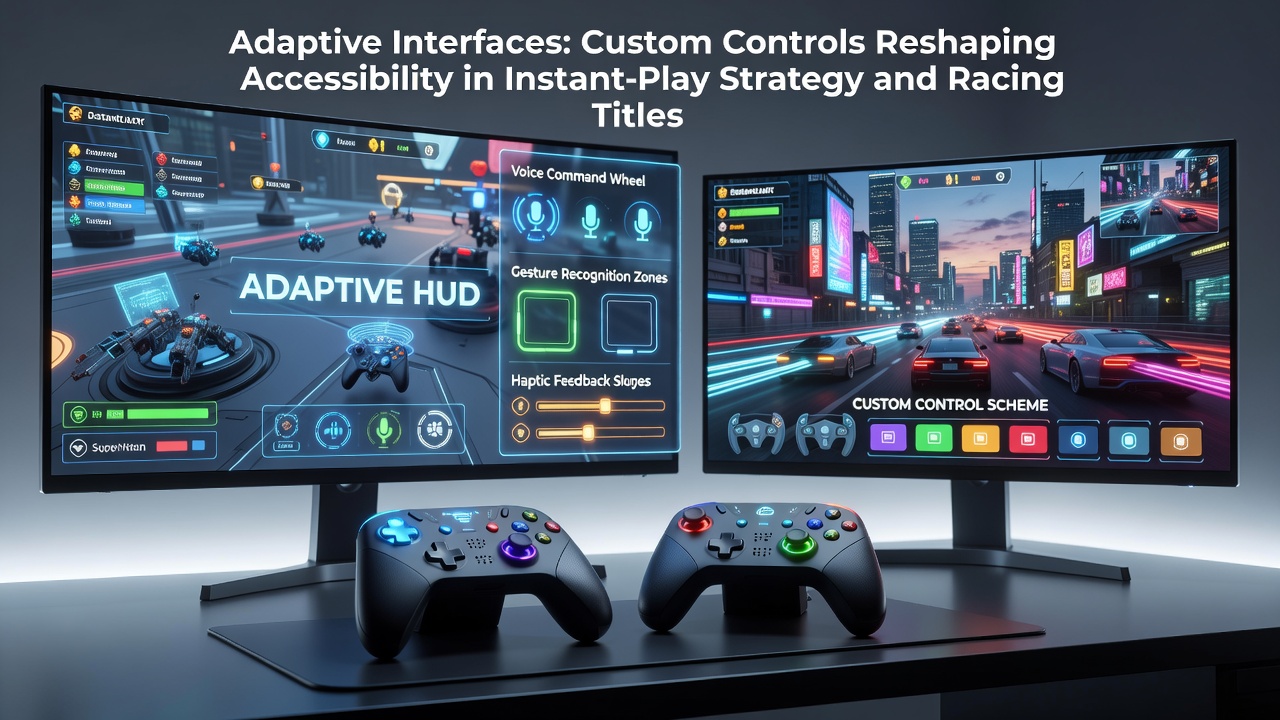
Adaptive interfaces now integrate custom controls directly into instant-play strategy and racing titles that run in web browsers, allowing players to modify input methods without downloads or installations. These systems adjust button layouts, sensitivity levels, and input mappings based on individual requirements, which data from industry reports shows has expanded participation in multiplayer sessions across various platforms. Observers note that as of July 2026, browser-based titles have incorporated these features at a rate that aligns with broader digital accessibility standards set by regulatory bodies in multiple regions.
Core Mechanics Behind Adaptive Controls
Developers embed adaptive interfaces through modular code that detects device capabilities and user preferences at launch, then presents options for remapping keys or gestures on the fly. In racing titles this means players can shift from keyboard arrows to touch-based sliders or even voice commands while the game maintains consistent physics and timing. Strategy games apply similar logic to unit selection and camera controls, letting participants scale complexity or introduce alternative input paths without interrupting session flow. Research indicates these adjustments reduce barriers for individuals who use assistive technologies, and integration happens through HTML5 and JavaScript frameworks that support real-time reconfiguration.
Application in Racing Titles
Racing games hosted on browser portals have adopted custom steering curves and acceleration thresholds that users calibrate via on-screen menus before matches begin. One implementation allows gradual sensitivity ramps that accommodate motor variations, while another offers color-coded overlays for visual tracking of track edges. Data collected from multiplayer logs reveals higher retention among participants who activate these controls, because sessions proceed at individual paces rather than fixed defaults. External standards from the European Commission on digital accessibility have influenced how these features get documented and tested across European-hosted game portals.
Implementation in Strategy Titles
Strategy games employ adaptive interfaces to handle resource management and command queues through scalable panels that resize or relocate based on player settings. Custom hotkey profiles save across sessions via local storage, and some titles include preset modes for reduced cognitive load during fast-paced multiplayer events. Figures from academic studies at institutions such as the University of Melbourne demonstrate measurable improvements in task completion rates when players apply these customizations, particularly in titles that blend turn-based elements with real-time racing segments. The approach keeps core rules intact while shifting presentation and input layers to match diverse needs.

Technical Foundations and July 2026 Trends
Browser engines have added native support for adaptive event handling, which lets developers link custom scripts to game loops without external plugins. As of July 2026, several portals report that over half of new racing and strategy releases include at least basic custom control suites, driven by compatibility updates in major browsers. These updates connect to device APIs that expose gyroscope data, touch pressure, and alternative pointer devices, enabling seamless transitions between input styles mid-session. Industry organizations such as the Entertainment Software Association have tracked adoption patterns that show consistent growth in titles designed for quick entry and exit.
Player Outcomes and Data Patterns
Analytics platforms integrated into these games record session lengths and completion metrics before and after control customization, revealing patterns where adjusted interfaces correlate with extended play across age groups and ability levels. Strategy titles that offer procedural map adjustments alongside control remapping see repeated engagement in cross-platform lobbies, while racing games benefit from shared leaderboards that normalize results from varied input methods. External links to guidelines from bodies like the United States Access Board provide frameworks developers reference when validating these features against established benchmarks.
Conclusion
Adaptive interfaces continue to evolve within instant-play environments by connecting custom controls to the specific demands of strategy and racing gameplay. Browser technology supports these changes through flexible code structures that preserve competitive integrity while broadening access. Ongoing updates through 2026 and beyond will likely refine detection algorithms and expand preset libraries, maintaining focus on factual integration rather than prescriptive design.