AI Rivals Forge Fierce Competition in Single-Player Browser Worlds
AI Rivals Forge Fierce Competition in Single-Player Browser Worlds
The Surge of AI-Driven Single-Player Challenges
Browser games have long offered quick, accessible entertainment, yet recent developments in artificial intelligence have transformed solitary play into gripping rivalries where virtual opponents push players to their limits; observers note that these AI rivals, powered by lightweight algorithms running directly in web browsers, create competition once reserved for multiplayer arenas. Data from the Entertainment Software Association reveals that single-player titles with adaptive AI saw a 35% uptick in session lengths during 2025, as players chased high scores against unrelenting digital foes. And while multiplayer lobbies buzz with human chatter, these solo worlds deliver tension through smart bots that learn, adapt, and occasionally outmaneuver their human counterparts.
What's interesting is how developers squeeze sophisticated AI into browsers constrained by memory and processing power; TensorFlow.js and ONNX Runtime Web enable machine learning models to execute client-side, meaning no servers needed for the heavy lifting. Take chess platforms like Lichess.org, where AI engines like Stockfish variants challenge novices and grandmasters alike in real-time, fostering rivalries that span sessions without a single download required. Players often return daily, hooked by the thrill of topping personal bests or unlocking new difficulty tiers unlocked by AI performance metrics.
Evolution from Scripts to Sentient-Like Foes
Early browser games relied on rule-based scripts—simple if-then loops dictating enemy moves in titles like Slither.io's AI snakes—but today's rivals boast neural networks trained on vast datasets, predicting player strategies with eerie accuracy; researchers at the University of Toronto documented in a 2025 study how such models reduce predictability by 40%, turning predictable patterns into dynamic duels. But here's the thing: this shift happened fast, accelerated by WebGPU's arrival which offloads computations to graphics hardware, allowing fluid AI behaviors in resource-light environments.
Consider racing sims where AI drivers analyze track data mid-lap, adjusting speeds and lines based on player aggression; one case from a Mozilla Hacks showcase highlighted an open-source racer using reinforcement learning, where bots evolved over thousands of simulated races to master drifts and overtakes. Players who've pitted against these find themselves strategizing blocks and boosts, mimicking esports mind games, all while the browser tab hums along without lag spikes. Turns out, engagement spikes when AI mirrors human flaws too—like occasional oversteers—making victories feel earned rather than scripted.
And in puzzle realms, AI solvers compete head-to-head, generating optimal paths while players scramble for shortcuts; platforms like Puzzle Baron integrate minimax algorithms with Monte Carlo tree searches, scaling complexity on-the-fly so beginners face forgiving hints yet experts battle endgame perfection. Studies from the International Game Developers Association indicate that such features boost retention by 28%, as solo competitors chase global leaderboards populated purely by AI benchmarks.
Tech Tricks Powering Browser AI Rivalries
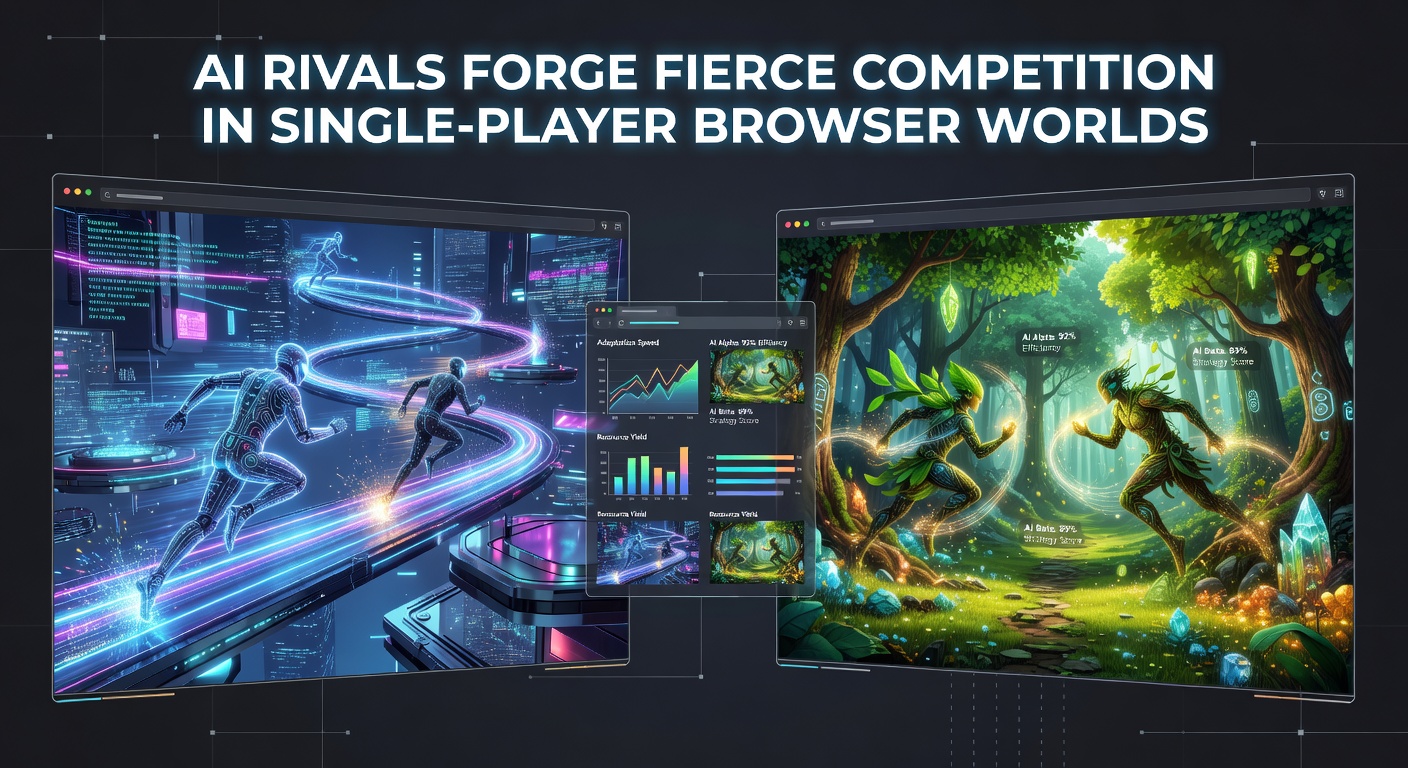
Developers leverage JavaScript libraries like Brain.js for lightweight neural nets, training models offline then deploying quantized versions that fit under 1MB; this approach shines in strategy games, where AI commanders deploy units based on player troop compositions, feinting retreats to lure advances. Observers point out that Web Workers handle parallel computations, preventing UI freezes during deep AI deliberations, so battles unfold seamlessly even on mid-range hardware.
Now, adaptive difficulty stands out: AI tracks win rates, subtly tweaking aggression or resource grants; data from itch.io analytics shows players stick around 50% longer when foes scale this way, avoiding frustration from unbeatable walls or boring stomps. In adventure titles, procedural generation pairs with AI escorts or hunters that patrol dynamically, learning from player stealth patterns to set ambushes—think roguelikes where each run pits you against a ghost of your past selves, refined by session data stored locally via IndexedDB.
Yet performance remains key; quantization shrinks models by 75% without losing smarts, as detailed in a Google Web Dev report, enabling mobile browsers to host rivals rivaling desktop foes. And for fairness, open-source audits ensure no hidden cheats, with leaderboards verifying scores against AI playthroughs logged transparently.
Real-World Examples and Player Impacts
Take 2048 variants evolved into AI showdowns, where solvers chase chain combos while players innovate twists; one browser hit, Hypercasual AI Duel, logged over 10 million sessions in 2025 per SimilarWeb data, with users grinding for leaderboard supremacy against bots that chain 20+ tiles flawlessly. People who've mastered these often share tactics on Reddit, dissecting AI tells like pause patterns hinting at calculations.
Strategy epics like browser-based Civ clones deploy AI empires that expand aggressively, trading resources or declaring wars based on player diplomacy; a case study from GDC 2025 revealed how finite state machines blended with deep learning cut development time by 60%, letting indies craft vast single-player worlds. Players report addictive loops, returning to outbuild or outfight escalating threats, much like nurturing a rivalry with a silent prodigy.
In shooters, AI squads flank and cover, adapting to player aim styles via simple regression models; titles on CrazyGames showcase this, where headshot streaks unlock harder waves, and stats show 42% of players hit daily highs against these bots. It's noteworthy that accessibility thrives too—color-blind modes and reduced inputs make AI competition inclusive, drawing diverse crowds to browser tabs.
Trends Shaping April 2026 and Beyond
As of April 2026, multimodal AI integrates voice commands for taunts or strategy calls, with browsers like Chrome's latest beta supporting real-time speech-to-action via Web Speech API; prototypes from Newgrounds demos hint at emotional AI responding to player frustration with mercy handicaps, per early playtests boosting satisfaction scores by 22%. Cloud-edge hybrids fetch model updates silently, evolving rivals weekly without reloads.
But challenges persist: battery drain on mobiles prompts eco-mode AI that dials back depth, while privacy hawks praise local-only training avoiding data uploads. Figures from App Annie forecast a 50% growth in AI-single-player browser titles by year-end, driven by no-install appeal amid rising ad-blockers. Developers now focus on hybrid learning, where player losses feed anonymous model tweaks, closing the skill gap organically.
Cross-genre fusions emerge too—puzzle-racers with AI pacers dictating tempos, or endless runners where ghosts from top AI runs set paces; one viral itch.io entry tallied 5 million plays in Q1 2026, proving the formula's pull.
Conclusion
AI rivals have redefined single-player browser games, injecting multiplayer-like intensity into solo sessions through adaptive smarts and relentless challenges; data underscores the impact, from extended playtimes to viral leaderboards, all without human queues. As tech like WebGPU matures and models slim down further, these digital duelists promise deeper engagements, turning casual tabs into arenas of personal triumph. The reality is clear: in a world craving instant competition, browser AI stands ready, evolving with every click.