Browser Games Bridging Language Barriers in International Classroom Collaborations
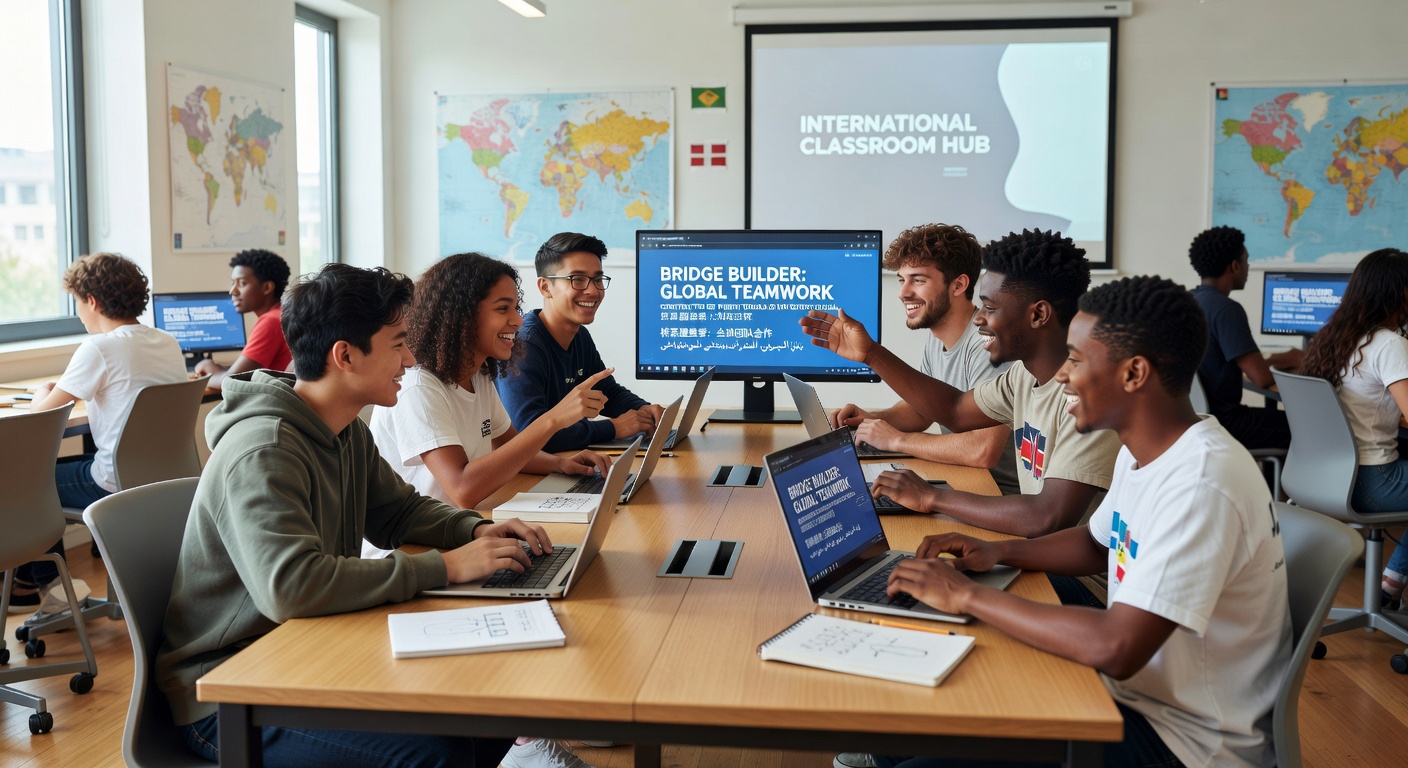
Browser games have become tools that connect classrooms across continents by reducing reliance on shared spoken languages during collaborative activities, and educators in multiple regions now integrate these platforms into virtual exchange programs where students from varied linguistic backgrounds work together on shared objectives. Research from institutions such as the University of Melbourne indicates that visual mechanics and real-time interaction mechanics allow participants to coordinate without full fluency in a common tongue, while data collected through European school networks shows measurable gains in cross-cultural communication metrics when browser games form the core of joint projects.
Accessibility Driving Global Participation
Students access browser games through standard web browsers on school devices or personal computers without installations or high-bandwidth requirements, and this low barrier enables participation from regions with limited digital infrastructure. Figures from the OECD's 2025 digital education survey reveal that over 65 percent of participating schools in pilot programs across Asia and Europe reported increased involvement from non-native language speakers when sessions relied on browser-hosted activities rather than downloaded software. Teachers coordinate sessions using platforms that support simultaneous logins from multiple time zones, which proves essential for partnerships between North American and Southeast Asian institutions where schedules rarely align perfectly.
Game Mechanics That Support Nonverbal Coordination
Many browser games emphasize spatial reasoning, pattern matching, and resource management that operate through icons and animations instead of text-heavy instructions, and these design choices let learners convey strategies through actions rather than words. Observers note that puzzle-based titles encourage trial-and-error exchanges where one participant demonstrates a move and others replicate or adapt it, creating feedback loops that build mutual understanding over repeated sessions. In May 2026 several international teacher networks plan to release updated guidelines based on longitudinal tracking of these interactions, highlighting how simplified control schemes correlate with faster rapport development between groups separated by language differences.
Documented Classroom Implementations
One documented program pairs middle-school groups in Canada with counterparts in Japan through weekly browser game sessions focused on environmental strategy challenges, and evaluation data collected by participating districts shows participants improving in both content knowledge and basic vocabulary acquisition in the partner language. Another initiative organized through Australian state education departments links rural classrooms with urban schools in Germany, where students navigate cooperative navigation challenges that require dividing tasks without verbal negotiation at every step. Researchers at these sites track engagement through session logs and post-activity surveys, finding that language-related frustration decreases as students develop shared visual shorthand for common commands.
Integration With Existing Language Curricula
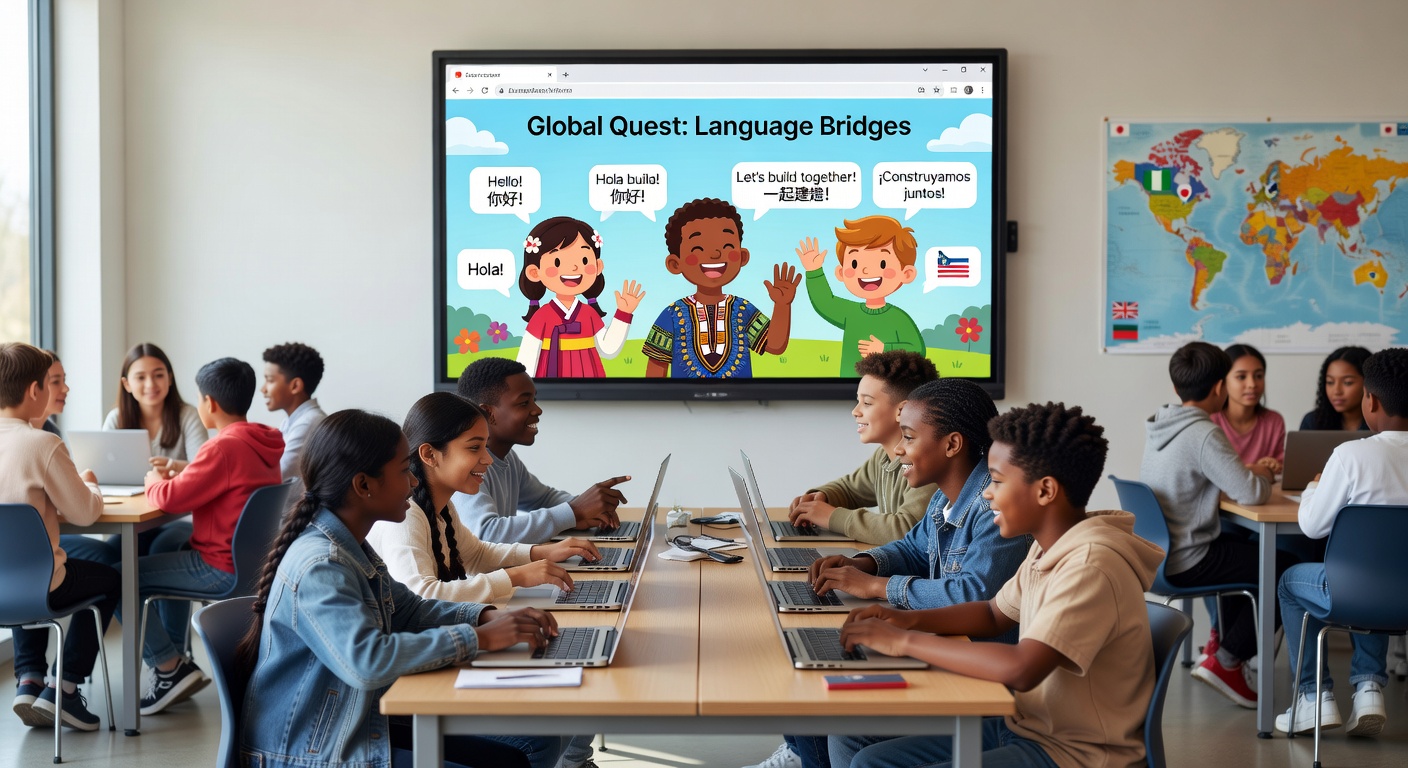
Educators embed browser game sessions into broader language lessons by following gameplay with targeted vocabulary reviews drawn directly from in-game terminology, and this sequencing reinforces retention while maintaining the collaborative momentum built during play. Data from a 2025 joint study involving schools in the United States and Nordic countries indicates that students exposed to such combined approaches demonstrate higher retention rates for functional phrases compared with traditional text-only exchanges. Platform developers have responded by adding optional subtitle layers and simple translation overlays that teachers can toggle based on group needs, further smoothing transitions between game-based collaboration and explicit language instruction.
Technical Features Enabling Sustained Interaction
Modern browser games incorporate cloud synchronization that preserves progress across devices and allows asynchronous contributions when live sessions prove impractical due to time differences, and this flexibility supports ongoing projects that span multiple weeks. Security protocols built into educational versions restrict chat functions to approved phrases or emoji sets, which limits opportunities for miscommunication while still permitting coordination signals. Network analyses conducted by academic teams confirm that these controlled environments maintain high participation rates even when one side operates with intermediate rather than advanced language skills.
Conclusion
Browser games continue to serve as practical bridges in international classroom settings by prioritizing action-based communication over linguistic precision, and ongoing data collection through 2026 will clarify which mechanics produce the strongest long-term effects on language confidence and collaborative outcomes. Schools adopting these methods report expanded partnership options that were previously limited by translation resources or scheduling constraints, pointing to wider adoption as technical access improves globally.