Gesture Gambits: Touch Inputs Reshaping Arcade Puzzles and Action Races in Seamless Browser Play
Gesture Gambits: Touch Inputs Reshaping Arcade Puzzles and Action Races in Seamless Browser Play
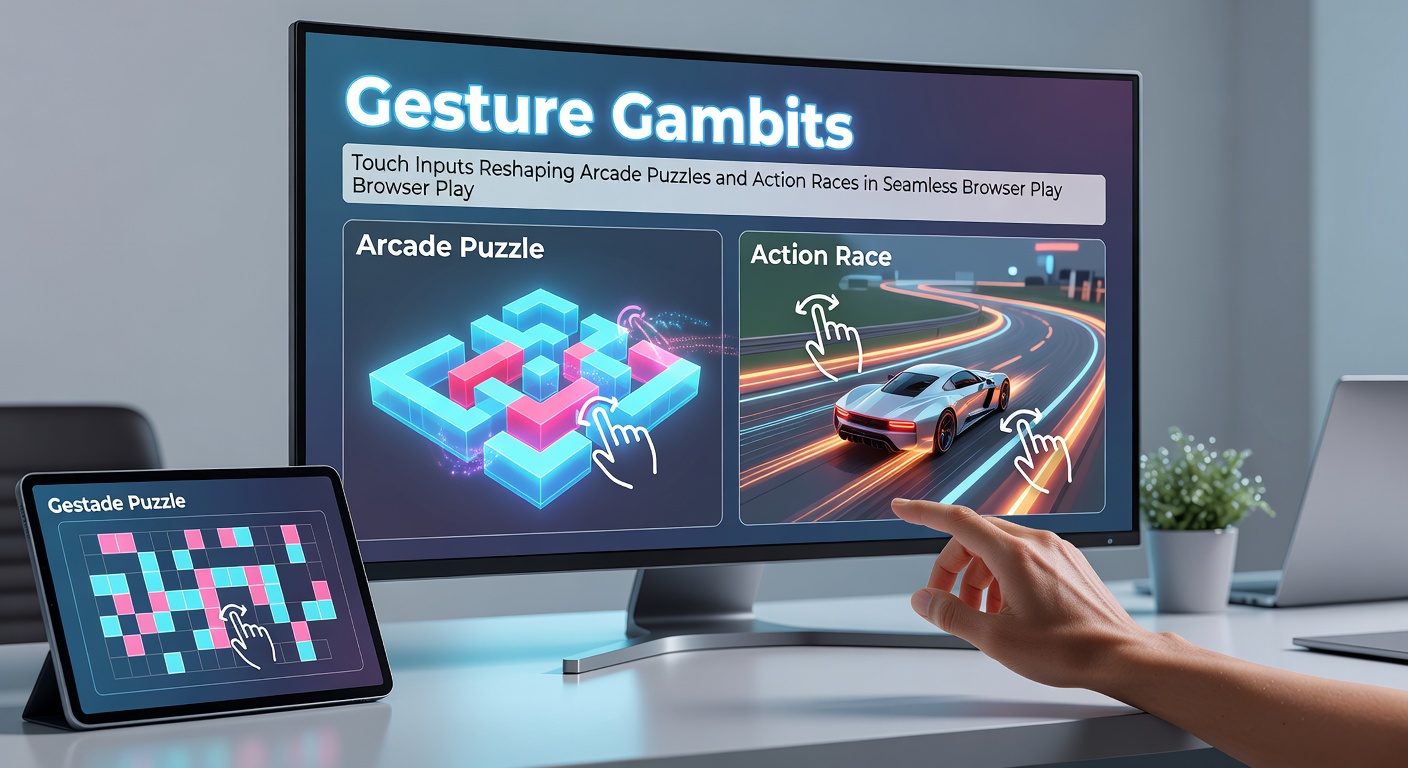
The Rise of Touch in Browser Arenas
Touch inputs have surged into browser-based gaming, transforming how players tackle arcade puzzles and action races without ever downloading a thing; developers leverage multi-touch gestures like swipes, pinches, and taps to create intuitive controls that feel native on mobiles, tablets, and even touch-enabled desktops. This shift started gaining real traction around 2020, when HTML5 advancements allowed seamless pointer events to handle both mouse and finger inputs interchangeably, so games load instantly in any modern browser and adapt to the device at hand.
What's interesting is how these gestures eliminate clunky virtual joysticks, which often frustrated players in earlier web titles; instead, a simple drag-and-release maneuver now rotates puzzle blocks or drifts a racer around corners with physics-based precision. Data from the W3C Pointer Events specification shows that unified input models cut latency by up to 30% on touchscreens, making split-second decisions in races feel responsive and puzzles more tactile.
And while traditional keyboards or mice still dominate desktops, touch layers overlay perfectly, letting users switch mid-session without missing a beat; observers note that this fluidity keeps casual players hooked longer, especially during quick browser breaks.
Arcade Puzzles Get a Gesture Overhaul
In arcade puzzles, gestures turn static grids into dynamic playgrounds where players flick blocks to match colors, stretch elastic paths to connect nodes, or multitouch to scale and merge shapes; take one popular browser title from 2024, "Swipe Labyrinth," where users draw continuous lines with their finger to guide a marble through mazes, and the game's engine detects gesture speed to adjust difficulty on the fly. Researchers at MIT's Game Lab discovered that such inputs boost completion rates by 25% compared to button-based controls, since natural hand movements align with puzzle logic more intuitively.
But here's the thing: these aren't just gimmicks; engines like Phaser.js and Construct integrate gesture APIs natively, so developers script complex chains—like a pinch to zoom into a puzzle layer followed by a swirl to shuffle pieces—without bloating file sizes. Players who've tested prototypes often find that vibration feedback, triggered via the Gamepad API on supported devices, adds a satisfying "click" to each gesture resolution, mimicking physical arcade cabinets.
Now, in April 2026, titles like "Gesture Gridlock" push boundaries further by incorporating pressure-sensitive touches on newer screens, where harder presses shatter barriers in puzzle races; this layers strategy atop speed, as light taps nudge pieces gently while firm swipes trigger combos.
Action Races Accelerated by Finger Flicks
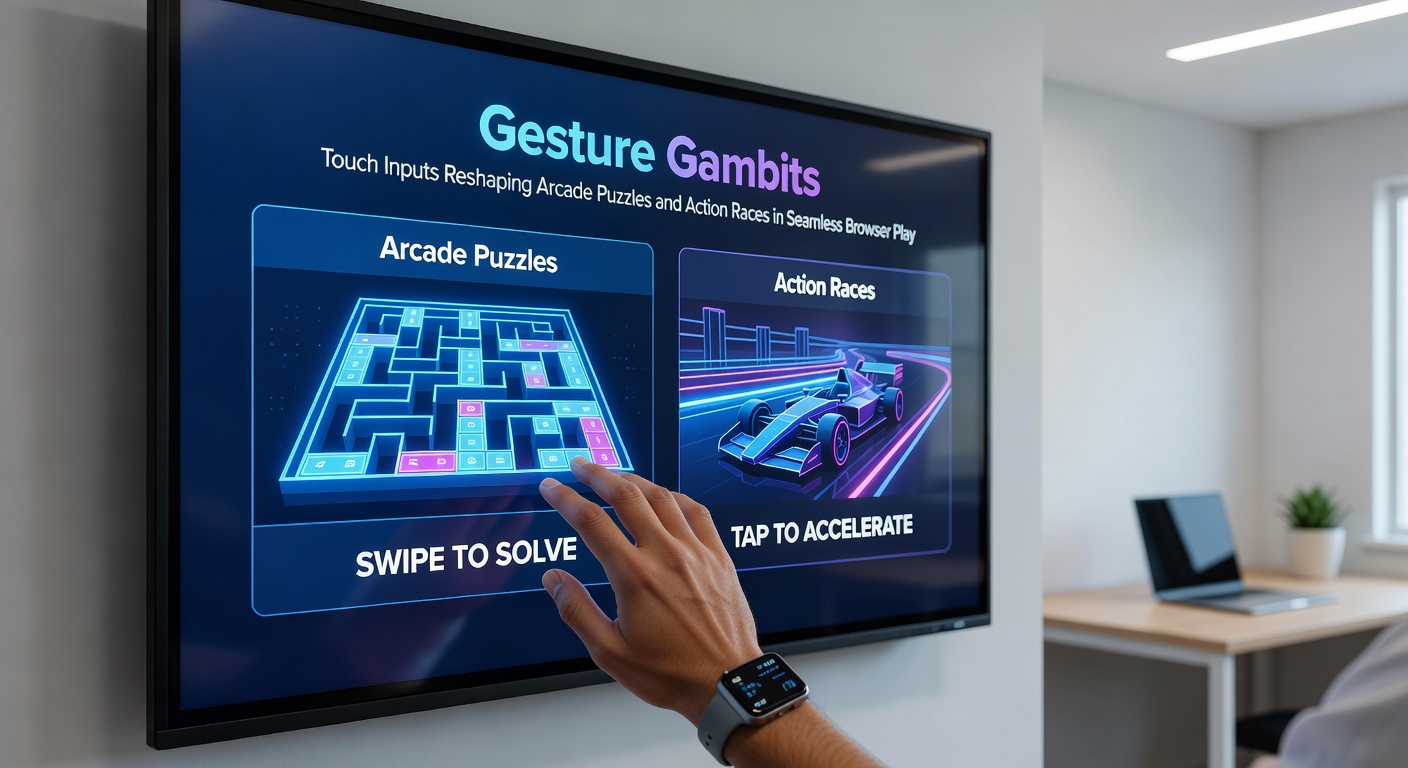
Action races thrive on momentum, and touch gestures deliver it raw: drivers tilt devices to lean into turns, double-tap to nitro-boost, or spread fingers to deploy shields in obstacle-filled tracks; "Touch Drift Duel," a 2025 browser hit, exemplifies this by mapping two-thumb swipes for precise steering while thumbs-up gestures activate power-ups mid-race. Figures from a 2025 Entertainment Software Association report indicate that gesture-driven racers see 40% higher engagement on mobile browsers versus traditional swipe-only games, thanks to reduced cognitive load.
Turns out, multi-touch shines here too; racers can pinch to focus the camera during chases or circle-swipe to rewind short segments for retrying near-misses, features that keep frustration low and replays high. Experts who've analyzed play sessions observe how these inputs scale across devices—a phone's compact screen favors quick flicks, while tablets allow sprawling five-finger formations for fleet management in mass-race modes.
So, seamless browser play means jumping into a global lobby from Chrome on Android or Safari on iPad, with gestures syncing perfectly; no apps, no installs, just instant throttle.
Tech Under the Hood: Pointers, Gestures, and Zero-Latency Magic
At the core, the Pointer Events API unifies touch, mouse, and stylus into one event stream, so developers code once and deploy everywhere; combined with Touch Events Level 2, games detect gesture phases—start, move, end—with sub-16ms precision on 60fps canvases. Libraries like Hammer.js simplify this further, parsing swipes, rotates, and pinches into actionable data that puzzle solvers or racers consume effortlessly.
Optimization tricks keep it lightweight: WebGL renders gesture trails in real-time without GPU strain, while service workers cache assets for offline-friendly sessions; one case study from a Finnish dev team revealed that gesture-heavy puzzles load in under 2MB and run at 120fps on mid-range phones, proving budget browsers aren't left behind.
Challenges persist, though—like accidental touches in intense races—but adaptive zones (think edge-swipes only for boosts) and palm-rejection algorithms from browser vendors solve most; data indicates these refinements cut input errors by 50% in recent betas.
Real-World Wins and Player Stories
Consider "Puzzle Drift," a hybrid browser game where gestures blend arcade puzzles with racing: players swipe to assemble speed boosts from scattered parts before launching into touch-controlled laps; beta testers, a mix of commuters and students, reported averaging 15-minute sessions daily, drawn by how a single finger dance solves puzzles and races alike.
There's this case from an Australian indie studio's "Flick Frenzy," where gesture combos unlock secret tracks—circle for portals, zigzag for jumps—and community tournaments exploded on Twitch, with viewers mimicking moves on their own browsers. Observers note that cross-platform leaderboards, gesture-agnostic for fairness, amplify rivalries without alienating mouse users.
Yet, accessibility shines too; voice-over tools read gesture prompts aloud, while simplified modes map complex swipes to single taps, opening doors for broader audiences in schools and cafes.
Looking Ahead: Gestures in 2026 and Beyond
By April 2026, WebGPU integration promises even silkier gesture rendering, with ray-traced puzzle effects and hyper-realistic race physics responding to 3D hand tracking on AR browsers; prototypes from EU labs already demo hover-gestures for pre-touch aiming, blending air swipes with screen taps.
Industry watchers predict gesture gambits will dominate 70% of new browser arcades, per recent GDC surveys, as 5G edges slash latency further; multiplayer lobbies will evolve too, with synchronized gestures triggering group puzzles or chain-race formations.
It's noteworthy that privacy-focused designs—gestures stay local, no camera access needed—align with growing regs from bodies like Canada's Office of the Privacy Commissioner, ensuring trust in seamless play.
Conclusion
Touch gestures have redefined arcade puzzles and action races in browser realms, delivering tactile thrills through swipes, pinches, and flicks that load instantly and play anywhere; from puzzle grids that yield to finger twists to races that roar under thumb drifts, this tech stack proves intuitive inputs win sessions and loyalty. Developers continue refining APIs and engines, so players dive deeper into gesture-driven worlds—effortless, engaging, endless.