Mapping Player Decision Trees in Hybrid Sports Adventure Games on Web Platforms
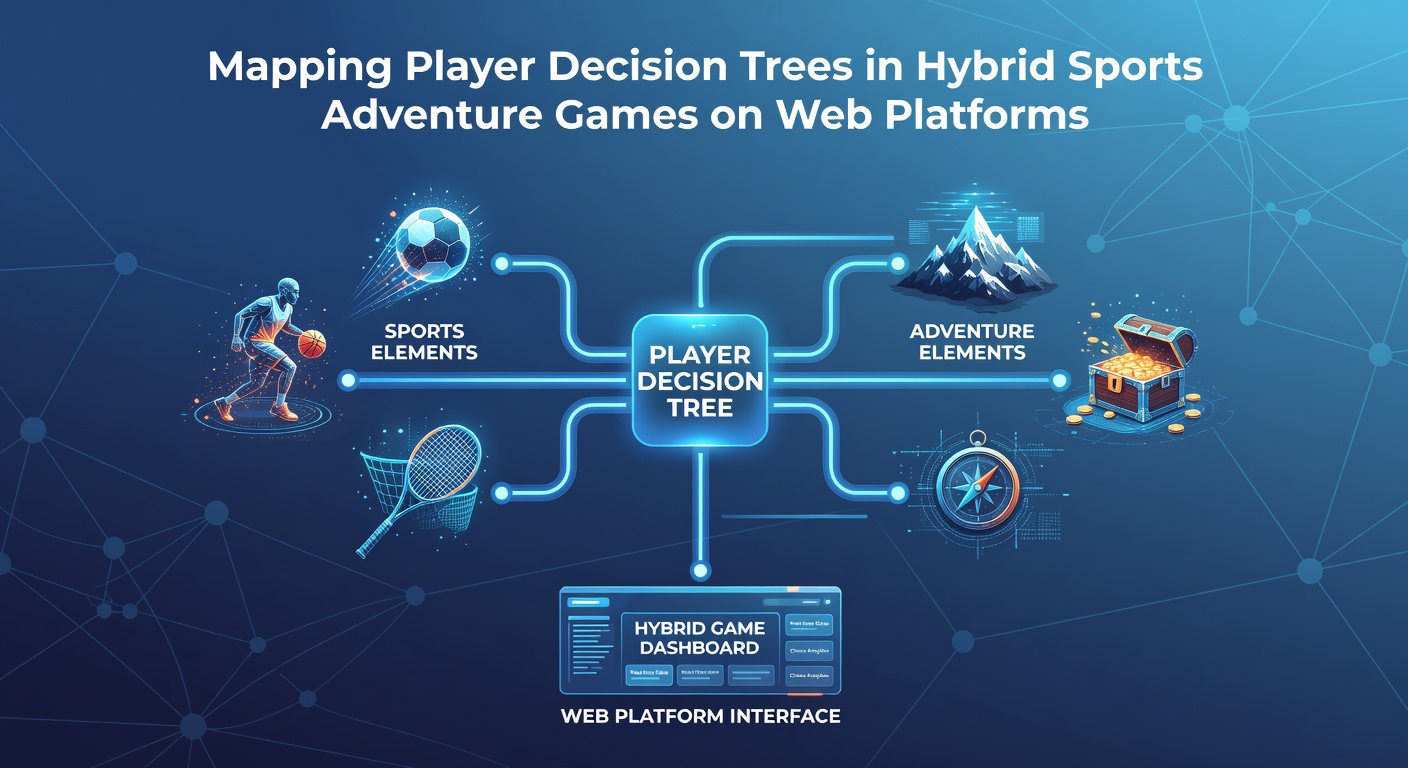
Hybrid sports adventure games on web platforms combine athletic competition mechanics with exploratory narrative elements, and researchers have developed methods to map player decision trees that trace choices across these blended systems. Decision trees represent branching sequences where each node captures a player action and its potential outcomes, while edges connect sequential decisions that influence both physical performance metrics and story progression variables.
Analysts at institutions across North America and Europe apply graph theory alongside machine learning to construct these maps from gameplay telemetry collected through browser APIs. Data sets gathered in 2025 reveal that sessions lasting beyond fifteen minutes generate decision paths averaging forty-seven distinct branches when players navigate between sprint sequences and puzzle-solving segments.
Core Components of Decision Mapping Techniques
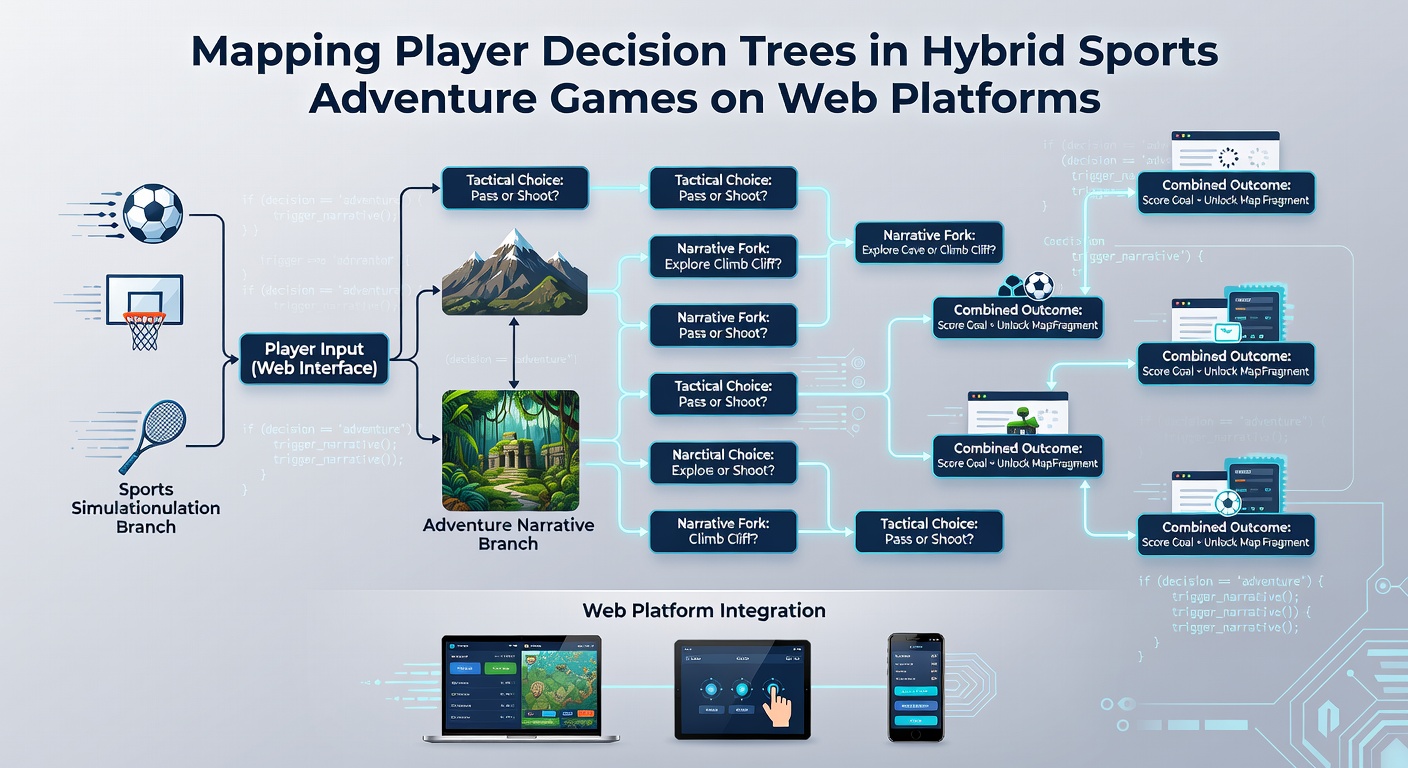
Mapping begins with event logging that records inputs such as directional controls, timing windows, and resource allocations during sports segments, then correlates those inputs with exploration choices in adventure modules. Software frameworks process these logs into tree structures where root nodes represent initial game states and leaf nodes indicate session endings or level transitions, allowing developers to identify frequent versus rare pathways.
Engineers integrate libraries like D3.js and custom WebGL visualizations to render interactive tree diagrams directly in browser environments, so teams can examine how decisions in a soccer-style match affect subsequent climbing or navigation puzzles without requiring separate client installations. Studies conducted at Australian universities demonstrate that real-time rendering of decision trees reduces debugging time by thirty-two percent compared with static log analysis alone.
Application in Web-Based Hybrid Environments
Web platforms impose constraints around latency and session persistence that shape how decision trees are both constructed and utilized. Developers implement server-side synchronization to maintain consistent tree states across browser refreshes, ensuring that a player who switches from a racing challenge to an inventory management sequence retains prior choices. According to reports from the Entertainment Software Association, browser-delivered titles accounted for eighteen percent of hybrid genre revenue growth in the first half of 2026.
Teams embed decision tree algorithms within JavaScript modules that execute locally while sending aggregated metrics to centralized dashboards. This hybrid computation approach balances immediate responsiveness with longitudinal pattern detection, revealing clusters where players repeatedly favor aggressive athletic routes over cautious exploration branches.
Data Collection and Analytical Frameworks
Telemetry pipelines capture variables including reaction times, path deviations, and outcome probabilities at each decision node. Canadian research groups have adapted reinforcement learning models to predict which branches players will select under varying difficulty parameters, achieving accuracy rates above seventy-eight percent when tested against anonymized session archives from June 2026.
Visualization tools layer heat maps onto tree diagrams to highlight high-traffic nodes where multiple decision routes converge, helping designers adjust reward structures without disrupting overall flow. Observers note that these layered representations make it easier to spot bottlenecks that cause players to abandon sessions prematurely.
Integration with Game Design Iterations
Design teams feed decision tree outputs directly into level editors so adjustments to sports physics or adventure item placements propagate through the mapped pathways automatically. This closed-loop process allows rapid prototyping where a change to jump physics in one module updates downstream probabilities across connected exploration segments. Industry reports indicate that studios employing such integrated mapping cut iteration cycles from weeks to days on average.
Cross-platform compatibility remains a focus because web standards evolve, requiring tree-mapping scripts to accommodate updates in WebAssembly and IndexedDB for persistent storage of player histories. European gaming associations have published guidelines encouraging standardized telemetry schemas that facilitate comparative studies across different hybrid titles.
Future Developments Projected Through 2026
Advances in browser-based machine learning runtimes are expected to enable on-device decision tree pruning, reducing bandwidth demands while preserving analytical depth. Researchers anticipate that by late 2026, collaborative mapping platforms will allow multiple studios to share anonymized tree structures for benchmarking without exposing proprietary mechanics.
Conclusion
Mapping player decision trees supplies web platform developers with structured insights into how athletes and explorers interact within unified game systems. Continued refinement of logging methods, visualization standards, and predictive models supports iterative improvements that align technical capabilities with player behavior patterns observed across global user bases.