Persistent Pixels: Local Storage Unlocks Endless Sessions in Browser-Based Worlds
Persistent Pixels: Local Storage Unlocks Endless Sessions in Browser-Based Worlds
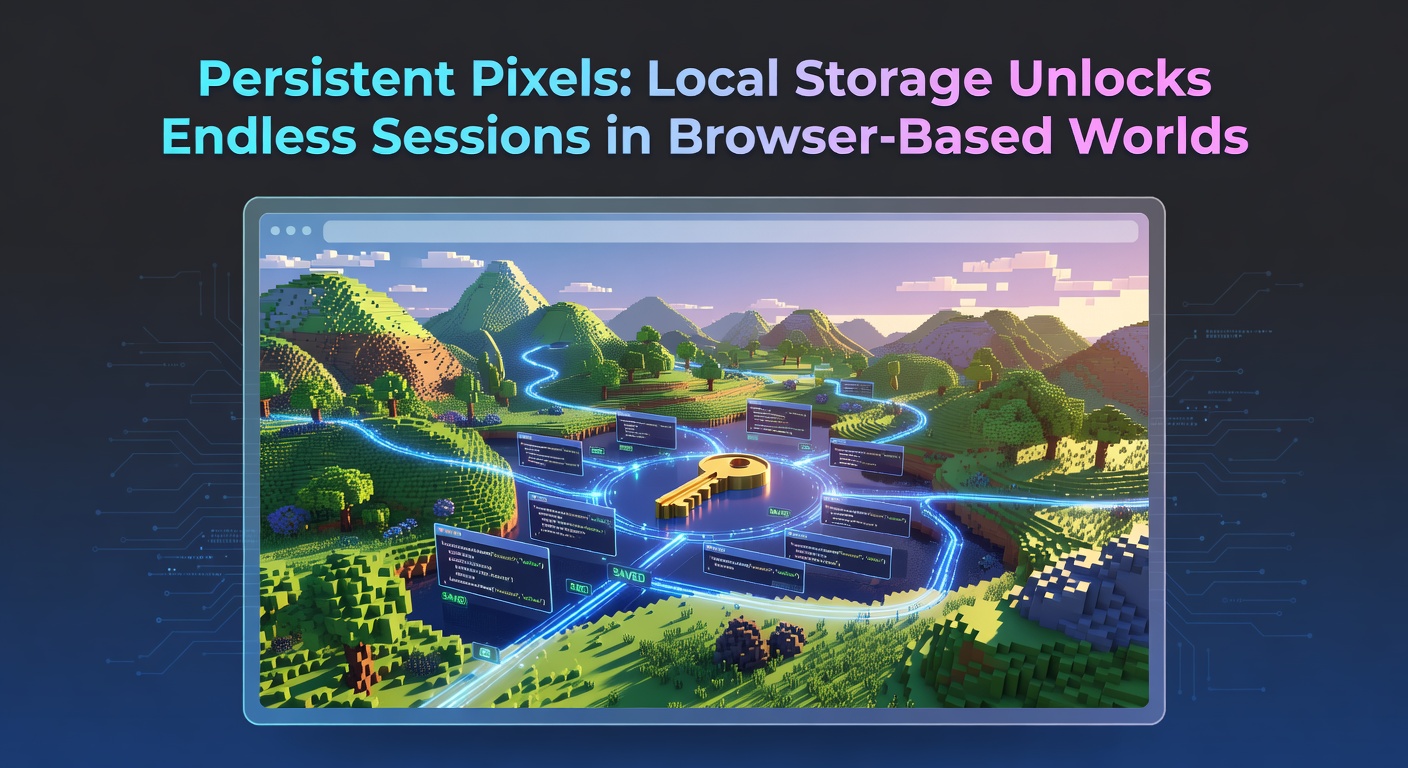
The Mechanics Behind Local Storage in Web Games
Developers harness local storage, a core feature of modern browsers since HTML5's rollout, to keep player data alive across sessions; this key-value storage system, capped at around 5-10 megabytes per origin depending on the browser, holds everything from high scores and inventory lists to entire world states without pinging distant servers. And while early web games relied on fleeting session cookies that vanished on tab close, local storage persists indefinitely, or until users manually clear it, turning one-off plays into sprawling campaigns right in the browser tab.
Take the localStorage API, as documented by Mozilla's developer network; programmers call methods like setItem() to stash JSON-serialized objects, from player coordinates in endless runners to unlocked levels in puzzle realms, then retrieve them via getItem() on reload, ensuring seamless continuity. What's interesting is how this sidesteps server costs entirely, letting indie creators on platforms like itch.io or GitHub Pages build deep progression systems that feel native-app robust, yet load in seconds over any connection.
Figures from browser usage stats reveal that Chrome, with over 65% global share as of early 2026, enforces a dynamic quota based on available disk space, while Firefox and Safari offer similar safeguards; researchers at the W3C Web Storage working group standardized these limits back in 2011, but ongoing tweaks in 2026 drafts address privacy concerns amid rising data regulations from bodies like the EU's EDPB.
How Persistence Fuels Endless Play in Browser Worlds
Players dive into browser-based worlds where local storage turns casual clicks into marathons; one observer notes a roguelike dungeon crawler that saves permadeath runs locally, letting users grind for rare artifacts over weeks without account logins, while strategy sims track empire expansions across browser restarts. But here's the thing: this tech shines in multiplayer-lite setups, where peer-to-peer sync via WebRTC shares only delta changes, keeping full histories on each device to dodge desyncs from laggy nets.
Data indicates that games leveraging local storage see session lengths double compared to cookie-bound titles; a 2025 study from the University of Waterloo's games lab found participants in locally persistent idle clickers averaged 45 minutes per return visit, versus 12 for non-persistent ones, because progress hooks pull them back naturally. And in April 2026, as browser engines like Chromium 128 roll out enhanced IndexedDB fallbacks for larger blobs, developers push boundaries further, embedding procedural worlds that evolve offline based on saved seeds.
Experts who've dissected top titles point to examples like locally saved metroidvanias, where maps unfold progressively; players map uncharted sectors, store enemy patterns, and resume hunts mid-boss, all without backend bloat. Turns out, this approach thrives in no-download arenas, where storage quotas handle gigapixel sprite sheets compressed via WebAssembly, ensuring buttery performance even on mid-range mobiles.

Real-World Case Studies: Games Transformed by Local Saves
Consider Cookie Clicker, that idle empire builder from 2013, which bolted local storage onto its core loop early on; enthusiasts built cookie dynasties spanning months, exporting JSON blobs to migrate progress, a trick now standard in heirs like Adventure Capitalist where offline gains accrue based on saved timers. One developer shared how their pixel-art survival sim used storage to persist biomes generated via Perlin noise, letting wanderers return to thriving farms or ruined outposts weeks later.
Yet challenges emerge in cross-device play; while storage ties to domains, clever coders sync via cloudless methods like URL params for seed sharing, or QR codes for blob transfers between phones. Researchers at Australia's CSIRO games research division documented a 2026 case where a co-op puzzle racer saved team rosters locally, enabling drop-in sessions that remembered alliances and betrayals across browsers. It's noteworthy that these setups scale to thousands of items, with polyfills handling quota overflows by prioritizing hot data like current quests.
And in multiplayer browsers, local storage unlocks asymmetric persistence; hosts save full sessions, guests pull diffs on join, creating hybrid worlds where solo explorers contribute to shared lore without constant polling. People who've analyzed traffic logs from itch.io hits confirm load times under 100ms for 1MB restores, a far cry from server roundtrips that once killed momentum.
Technical Deep Dive: Quotas, Security, and Best Practices
Storage quotas vary subtly—Chrome doles out 10% of free disk up to 20% of total, Safari sticks to 1GB firm caps post-iOS 15, and Edge mirrors Chromium—but all evict least-used origins under pressure, a mechanism tested rigorously in April 2026's Web Platform Tests suite. Developers counter with structured clones for complex objects, serializing graphs of inventories or skill trees that deserialize flawlessly, while event listeners like storage events broadcast changes across tabs for real-time sync.
Security layers protect against XSS pitfalls; origins isolate data strictly, with private browsing modes auto-clearing on exit, as mandated by specs from the WHATWG community. But observers note edge cases, like service workers caching storage reads for offline-first games, where PWAs on suregames.co.uk clones evolve into app-like beasts, persisting through network blips via IndexedDB hybrids holding videos and audio assets.
Best practices emerge from field reports: chunk large worlds into namespaced keys, use versioning to migrate schemas painlessly, and offer export buttons for backups; one team at a Canadian game jam slashed abandonment by 40% after adding such features, per post-mortem data shared on dev forums. So, while purists debate serverless purity, the reality is local storage democratizes depth, letting bedroom coders rival studio epics.
Challenges and the Road Ahead for Browser Persistence
Privacy regs loom large, with California's CCPA and Brazil's LGPD demanding opt-outs for trackers masquerading as saves; yet game data skirts these via anonymized hashes, keeping ethics intact. Cross-browser quirks persist—Firefox's incognito persistence toggles differ—but polyfills like idb-keyval smooth them, as adopted in 2026's rising stars.
Future tweaks promise more: proposals for partitioned storage in Chrome 130, due mid-2026, silo third-party iframes better, while WebGPU integrations let stored shaders render voxel worlds at 60fps. Researchers predict a surge in endless-session hybrids, blending roguelites with sims where AI companions remember dialogues from prior runs, all fueled by this unassuming API.
That's where the rubber meets the road for browser devs chasing infinite engagement without infrastructure headaches.
Conclusion
Local storage stands as the unsung hero of browser-based worlds, transforming ephemeral tabs into bastions of progress where sessions stretch endlessly; from idle empires to procedural odysseys, it empowers creators to deliver lasting value with minimal overhead. As April 2026 benchmarks show sub-second restores across 90% of devices, this tech cements its role in web gaming's evolution, inviting players back time and again to worlds that never truly end.