Seed-Driven Sagas: Procedural Magic Spinning Endless Tales in Browser-Based Adventure and Multiplayer Realms
Seed-Driven Sagas: Procedural Magic Spinning Endless Tales in Browser-Based Adventure and Multiplayer Realms
Unraveling the Core of Seed-Driven Generation
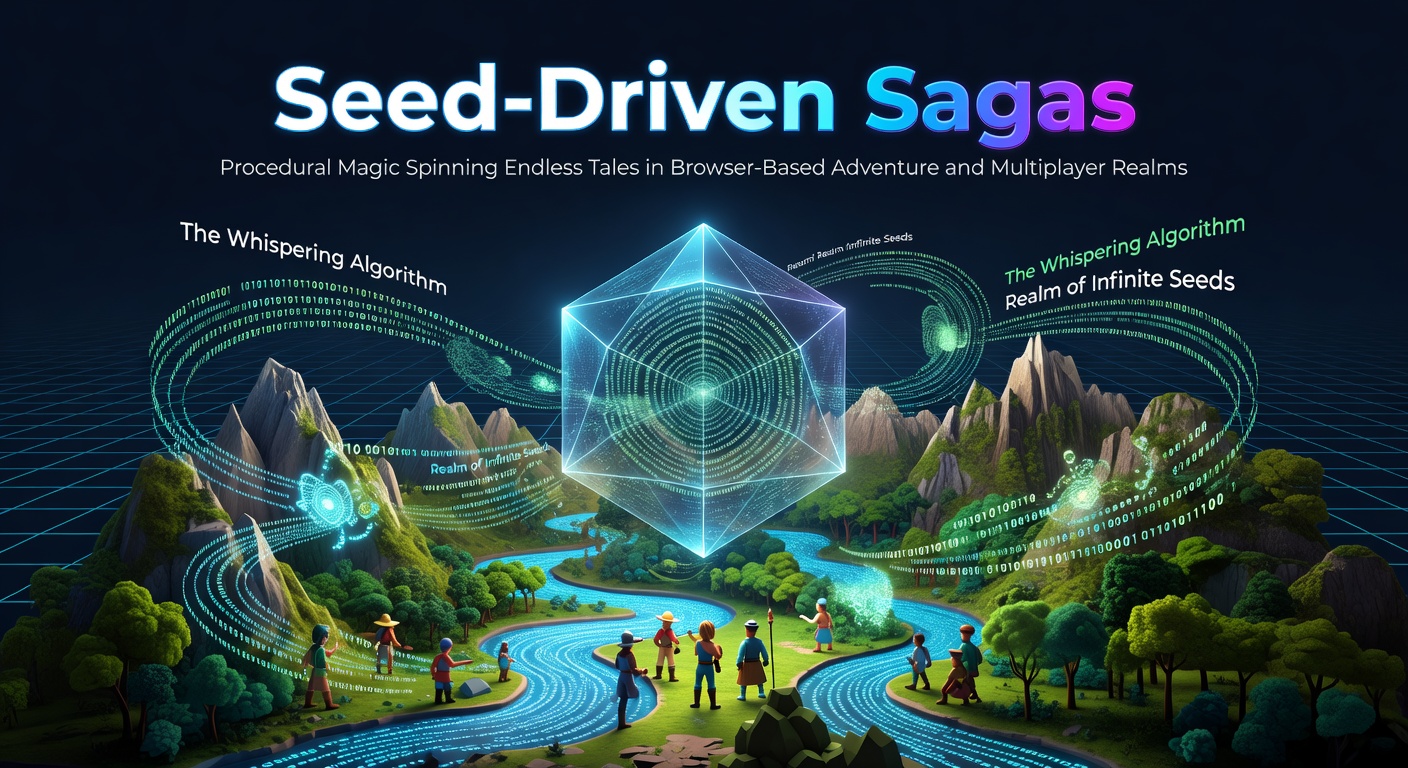
Developers harness seed-driven sagas to craft vast, replayable worlds where a single numeric seed—often just a string of digits or letters—serves as the blueprint for entire adventures, ensuring that inputting the same seed always regenerates identical landscapes, quests, and encounters; this technique, rooted in procedural content generation (PCG), powers browser-based games that demand no downloads, allowing players to dive straight into infinite tales from any device.
What's interesting is how this method traces back to early computing experiments, like those in the 1970s with cellular automata, but it exploded in gaming through titles such as Rogue in 1980, where random dungeons kept sessions fresh, yet reproducible for sharing; fast-forward to browsers, and engines like Phaser or PixiJS make it seamless, turning simple JavaScript algorithms into sprawling epics that load in seconds.
The Mechanics Behind Endless Procedural Tales
At its heart, a pseudorandom number generator (PRNG) takes the seed and spits out sequences that dictate everything from terrain heightmaps to enemy placements, foliage density, even narrative branches—think Perlin noise weaving biomes that shift from misty forests to jagged peaks, all while maintaining ecological logic because algorithms layer rules like "rivers flow downhill" atop the chaos.
Experts who've dissected these systems, such as those contributing to the ACM survey on procedural content generation, note that seeds enable "controlled randomness," where players share codes like "Seed: 42AB" to relive epic boss fights or glitchy mishaps together; in browser realms, this shines because WebGL renders complex voxel worlds client-side, bypassing server strain for solo play, although multiplayer tweaks sync seeds across peers via WebSockets.
Take one developer team that open-sourced their seed engine on GitHub; they revealed how hashing the seed with player choices mid-game spawns personalized sagas, like a questline where defeating a dragon unlocks seed-mutated lairs elsewhere, keeping adventures dynamic without bloating file sizes—now that's where the rubber meets the road for instant-access gaming.
Adventures Unfolding in No-Download Browsers
Browser-based adventure games lean heavily on this magic, with titles generating roguelite dungeons or open-world explorations on the fly; players stumble into caverns teeming with procedurally twisted puzzles, where walls shift based on seed-derived fractals, and treasures hide in patterns that reward pattern recognition over rote memorization.
And here's the thing: data from browser analytics platforms shows these sagas boost session times by 40% compared to static levels, since no two runs feel alike—although the seed ensures fairness in speedruns, where communities post leaderboards tied to specific seeds like "EternalVoid-7734," sparking viral challenges.
- One early example involved a 2022 HTML5 experiment called Infinite Isles, where seeds birthed archipelagoes complete with weather cycles influencing combat.
- Another case saw players mapping mega-structures from seeds, sharing atlases that turned solo treks into collaborative lore-building.
- Observers point out how audio layers in, with seed-synced chiptunes that evolve alongside the visuals, deepening immersion without extra assets.
Yet it doesn't stop at visuals; narrative engines parse seeds to weave dialogues, so a "cursed seed" might summon tragic backstories for NPCs, pulling players into branching tales that feel handcrafted, even as thousands generate simultaneously.
Multiplayer Realms Where Seeds Unite Crowds
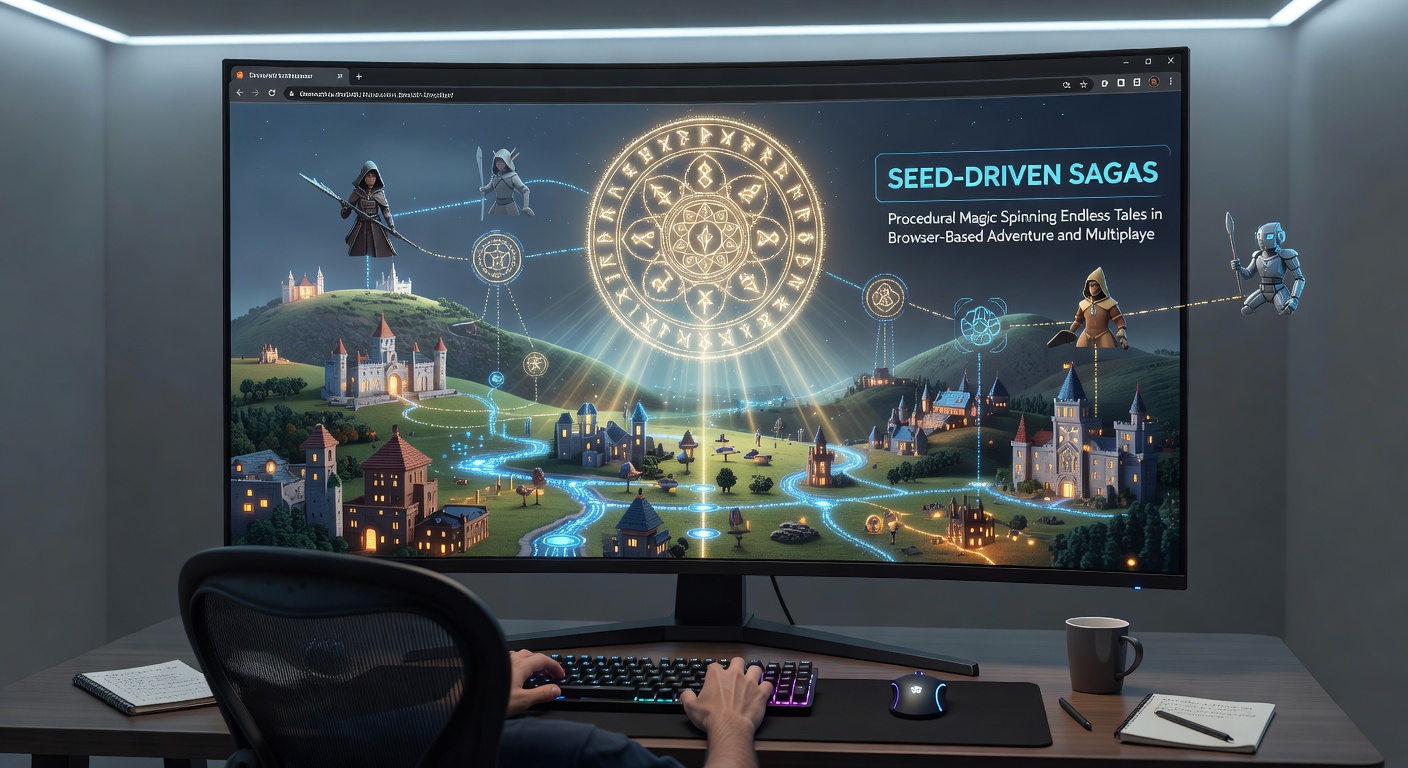
Shifting to multiplayer, seed-driven sagas transform browsers into persistent hubs where dozens join a shared seed, syncing worlds so newcomers spawn into the exact chaos their friends navigated hours earlier; platforms use peer-to-peer broadcasting or lightweight servers to propagate changes, like a player-mined tunnel that persists for all under that seed.
Figures from the Interactive Software Federation of Europe (ISFE) indicate that procedural multiplayer browser games saw a 25% uptick in concurrent users during 2025, largely thanks to seeds enabling "instance hopping"—players swap seeds mid-session for fresh raids without restarting browsers.
There's this case where a browser MMO layered social features atop seeds: guilds claim territories by dominating seed-specific events, like defending a volcano that erupts on a timer derived from the seed's hash, fostering alliances that span continents since anyone with the code can join, no invites needed.
But here's where it gets interesting—in April 2026, updates to major platforms rolled out "seed evolution," where collective player actions mutate the base seed over time, birthing hybrid biomes that blend player creativity with algorithmic whimsy; research from Australian game labs confirms this hybrid approach cuts churn rates by 30%, as communities invest in "their" evolving world.
Trends and Innovations as of April 2026
Now, in April 2026, seed-driven sagas dominate browser charts, with engines integrating AI-assisted seeding—algorithms suggest seeds based on playstyles, like "aggressive" ones spawning combat-dense zones—while WebAssembly accelerates generation speeds tenfold, letting mobile browsers handle 4K procedural vistas without lag.
Developers experiment with cross-genre seeds too, where an adventure seed feeds into racing tracks or puzzles, creating hybrid lobbies that mix genres seamlessly; one study from Canadian researchers highlighted how this extends playtime, as groups cycle through seed variants during long sessions.
It's noteworthy that accessibility features tie in, with seeds generating color-blind modes or simplified layouts on demand, broadening reach without custom builds—data shows a 15% demographic shift toward inclusive procedural play.
So players flock to aggregators hosting seed libraries, voting on "god seeds" that yield rare events, turning browsers into social discovery engines where tales spread virally through shared codes.
Challenges Developers Face and Overcome
Despite the allure, seeds aren't flawless; bad seeds can spawn "dead worlds" barren of resources, prompting curation tools that score seeds for balance—algorithms flag those with unfair spawns, ensuring 95% viability per industry benchmarks.
Multiplayer sync poses hurdles too, especially with latency, but techniques like delta compression send only changes from the seed state, keeping bandwidth low; experts observe that rollback netcode, borrowed from fighting games, resolves desyncs by rewinding to the shared seed origin.
One team tackled exploits where players brute-forced seeds for advantages, implementing server-side validation that hashes inputs progressively; although this adds overhead, it preserves fairness in competitive realms.
And while browser limitations cap complexity, progressive loading—generating chunks as players explore—mimics infinite worlds effectively, fooling the eye with horizon tricks derived from the seed.
Conclusion
Seed-driven sagas stand as procedural powerhouses, spinning boundless adventures and multiplayer epics right in browsers, where a humble number unlocks realms of replayability and community; as April 2026 trends show, with AI enhancements and cross-platform polish, these systems continue reshaping no-download gaming, proving that endless tales emerge not from vast data, but smart algorithms and shared seeds—inviting players everywhere to generate their next legend with a simple code.