Shifting currents: player migration patterns across mixed-genre digital entertainment without downloads
Browser-based platforms continue to draw participants who move fluidly among puzzle challenges, racing sequences, strategy sessions, and action sequences, all without requiring software installations or large file transfers. Researchers tracking these movements note that the absence of downloads removes traditional barriers, allowing individuals to sample hybrid experiences in single sessions that span multiple genres.
Tracking the Flows in August 2026
Data compiled during August 2026 reveals measurable shifts, with participants reallocating time from single-genre environments toward mixed arenas where elements of adventure blend with sports simulations and tactical layers. Observers note that sessions often begin in one category yet transition rapidly when procedural elements or real-time multiplayer components appear, creating pathways that connect previously separate player bases. Figures from industry tracking services indicate that roughly 42 percent of active browser accounts engaged with at least three distinct genre clusters within a seven-day window that month.
Key Drivers Behind Genre Crossings
Accessibility stands out as the primary catalyst because instant loading permits quick switches between modes, while persistent save states maintain progress across different titles. Those who study participation patterns report that leaderboard systems and daily micro-challenges further encourage movement, as participants chase rewards that span racing leaderboards one hour and puzzle leaderboards the next. Cloud-based synchronization ensures that achievements carry forward regardless of the genre entry point chosen, reducing friction that once kept audiences segmented.
Geographic and Demographic Variations
Regional data shows distinct rhythms. North American accounts demonstrate higher rates of movement toward action-strategy hybrids, whereas European cohorts favor puzzle-adventure combinations according to reports issued by the Entertainment Software Association. In Asia-Pacific markets, racing elements frequently serve as gateways into broader multiplayer strategy environments, a trend documented in analyses released by the Interactive Games & Entertainment Association. Age demographics also influence direction: participants aged 18-24 migrate more often toward fast-paced hybrids, while those over 35 show steadier movement into slower, layered strategy and puzzle spaces.
Platform Mechanics Enabling Sustained Movement
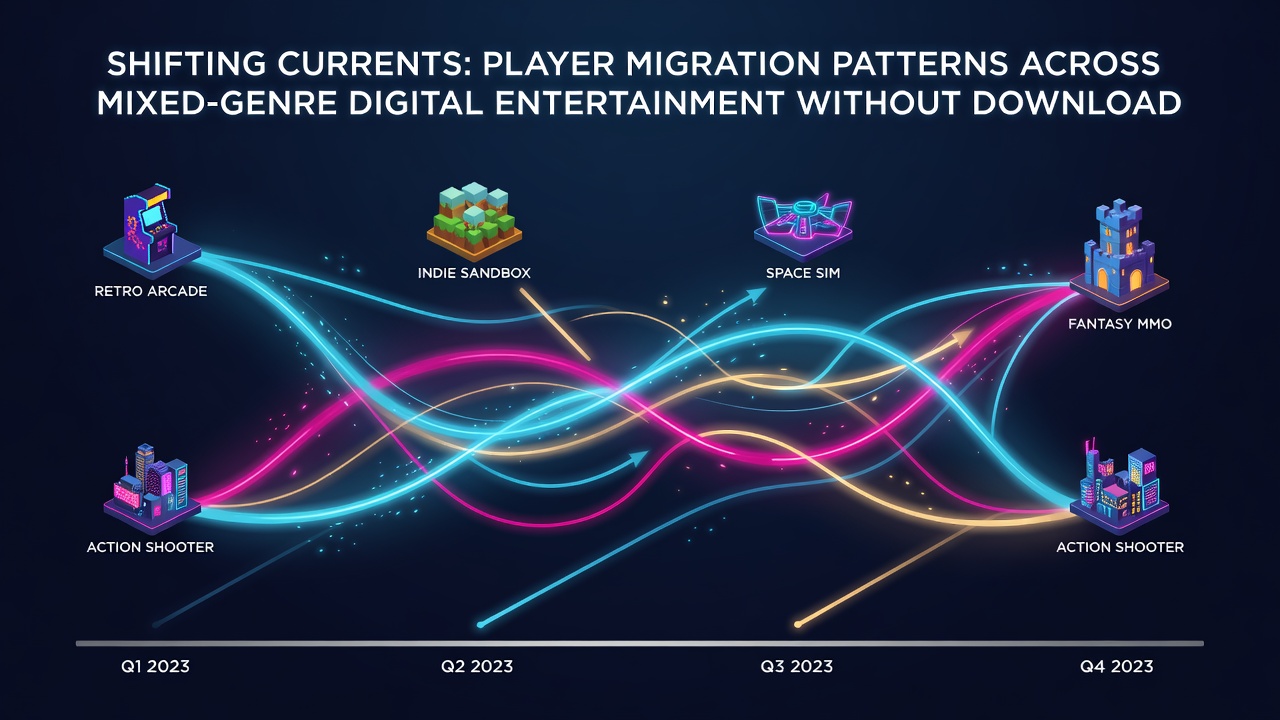
Developers embed referral systems and event calendars that reward continued exploration across categories, turning isolated visits into extended chains of activity. Local storage features preserve individual configurations and partial progress, allowing a player who exits a racing segment to resume inside a related puzzle environment without loss of context. Procedural generation further supports these patterns by creating fresh instances that feel connected even when genre labels differ, sustaining engagement across repeated visits within the same day.
Measurement Approaches and Emerging Metrics
Analysts employ session-path mapping rather than traditional genre retention statistics, capturing sequences such as puzzle-to-racing-to-multiplayer-strategy within single browser tabs. Heatmap visualizations produced in August 2026 highlighted peak transition hours between 19:00 and 22:00 UTC, coinciding with simultaneous event launches across multiple titles. These metrics replace older single-genre retention figures and provide clearer pictures of how audiences allocate attention across mixed environments.
Conclusion
Player migration across mixed-genre browser entertainment continues to accelerate because technical and design choices eliminate friction while reward structures span categories. Continued monitoring through August 2026 and beyond will clarify whether these currents stabilize into predictable seasonal rhythms or evolve into entirely new participation models.