Sync Layers: Network Timing Protocols Shaping Cooperative Turns in Web Strategy and Action Arenas
 Network timing protocols form the backbone of coordinated interactions in browser-based strategy and action environments where multiple participants engage simultaneously or sequentially. These protocols manage clock alignment across distributed clients so that player inputs register in consistent order without drift that could disrupt shared sequences. Data indicates that implementations built on standards such as the Network Time Protocol and Precision Time Protocol reduce latency variance in web sessions by aligning device clocks to within milliseconds. Observers note that cooperative turns in strategy arenas rely on these layers to sequence actions across players who may connect from different regions. When one participant submits a move, the protocol stack ensures the update propagates and validates before the next turn activates, preventing out-of-order execution. Research from academic institutions shows that without precise synchronization, turn-based systems experience desync rates that climb above acceptable thresholds during peak concurrent usage.
Core Mechanisms Behind Timing Alignment
Precision Time Protocol operates at the hardware-assisted level in many modern browsers, exchanging timestamped messages to calculate offset and delay between nodes. This approach delivers sub-microsecond accuracy in controlled networks while WebSocket connections carry the actual game state payloads. Those who study multiplayer systems observe that combining these methods allows action arenas to maintain frame-level consistency even when participants experience variable packet loss.
Browser environments leverage additional layers such as WebRTC data channels that embed timing information directly into media streams. This integration supports real-time cooperative elements where players react to shared events within tight windows measured in tens of milliseconds. Figures from industry reports reveal that arenas using these combined stacks report lower rollback frequencies compared with systems relying solely on server-side tick rates.
Applications in Strategy and Action Hybrid Titles
Web strategy titles that incorporate simultaneous planning phases followed by execution turns depend on sync layers to broadcast collective decisions at identical moments. Action components embedded within the same sessions require the same timing backbone to resolve collisions and ability activations without favoring any client. Experts have documented cases where protocol upgrades shifted average resolution times from 120 milliseconds down to under 40 milliseconds across global player bases.
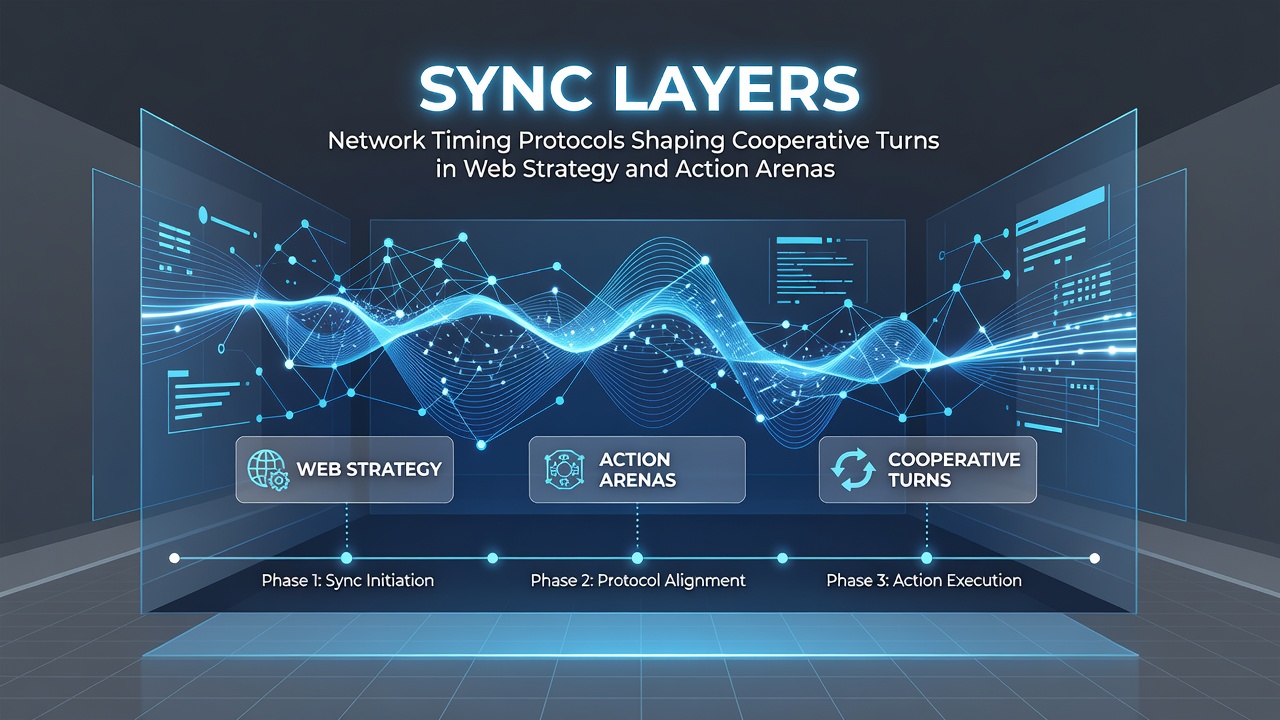
One documented implementation routes all cooperative inputs through a central timing authority that applies predictive compensation algorithms. Players experience these corrections as seamless because the protocol compensates for jitter before rendering occurs. Data collected through July 2026 shows continued refinement of these algorithms correlating with higher session retention across hybrid genre titles.
Challenges Addressed Through Protocol Evolution
Variable network conditions remain the primary obstacle to reliable cooperative turns. Packet reordering and asymmetric routing can introduce apparent timing skew that protocols must detect and correct. Researchers discovered that adaptive filtering techniques applied at the sync layer successfully isolate true clock drift from transient congestion spikes.
Security considerations also influence protocol design because malicious clients could attempt to manipulate timestamps and gain unfair sequencing advantages. Implementations now incorporate cryptographic signing of timing messages so that validation occurs before any turn processes. Industry organizations tracking these developments report steady adoption of signed protocols across browser platforms since early 2025.
Integration With Browser Technologies
Modern web standards continue to expand timing capabilities through APIs that expose high-resolution performance counters. These counters feed directly into sync layers and enable finer-grained measurement of round-trip times during active sessions. Those monitoring adoption trends note that titles released after mid-2025 integrate these APIs more extensively than earlier releases.
Cross-platform consistency benefits from protocol stacks that abstract differences between desktop and mobile browsers. Mobile connections often exhibit higher jitter yet the same timing mechanisms normalize input windows so that cooperative sequences remain fair. Evidence suggests continued investment in these abstractions will support broader device participation through the remainder of the decade.
Conclusion
Network timing protocols continue to define how cooperative turns function within web strategy and action arenas by enforcing consistent ordering and minimizing desynchronization events. Ongoing refinements in protocol stacks and browser integration points sustain the technical foundation required for complex multiplayer interactions. As browser capabilities advance, these sync layers are positioned to support increasingly sophisticated cooperative mechanics across diverse player environments.