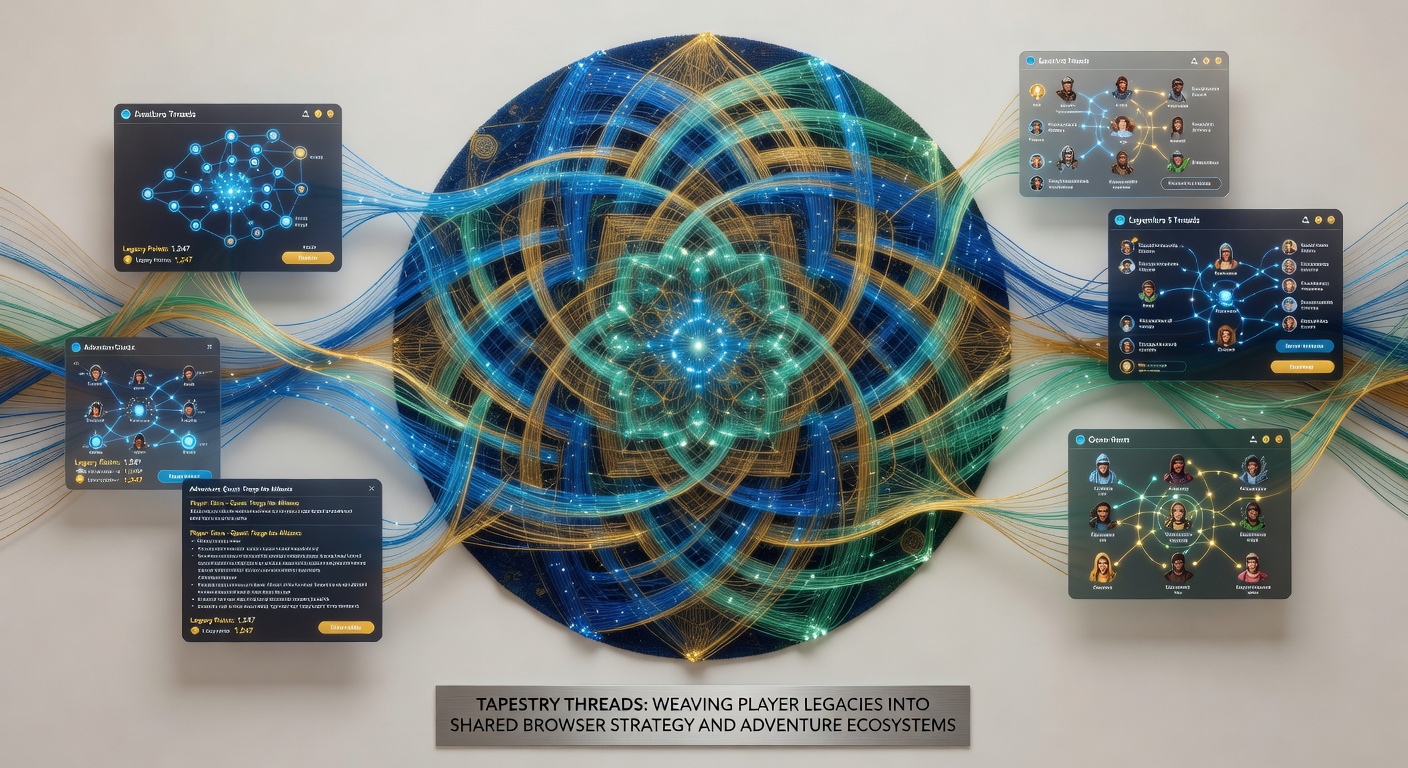
Tapestry Threads: Weaving Player Legacies into Shared Browser Strategy and Adventure Ecosystems

Browser-based strategy and adventure ecosystems have evolved into spaces where individual player histories integrate directly into collective worlds, creating lasting effects that influence future sessions and community decisions. Developers build these systems around persistent account profiles that carry forward choices, achievements, and constructed assets from one interaction to the next.
Shared environments record actions such as territory expansions or alliance formations, then reflect those records in updated maps and resource distributions visible to all participants. Data from industry reports shows that browser platforms using these mechanisms maintain higher session continuity across multiple user accounts compared with isolated single-session titles.
Legacy Mechanisms in Shared Browser Worlds
Player legacies form through layered tracking systems that log contributions ranging from completed quests to constructed infrastructure. These records feed into ecosystem rules where prior decisions alter available options for later arrivals. Researchers at institutions studying digital entertainment have documented how such tracking encourages repeated engagement because outcomes from earlier play carry measurable weight in subsequent challenges.
One implementation uses server-side databases synchronized with browser sessions to store legacy elements like reputation scores or unlocked pathways. When players return, the interface displays changes driven by collective history rather than resetting to default states. This approach supports both competitive strategy layers and narrative adventure branches that reference past events without requiring downloads or installations.
Integration Across Genres and Platforms
Strategy components often intersect with adventure elements when legacy threads connect resource management decisions to story progression. A player who establishes trade routes in one cycle might unlock new exploration nodes for the broader group in the next cycle. Observers note that these connections create feedback loops where individual actions scale into group-level shifts, sustaining activity across diverse time zones.
According to findings presented by the Entertainment Software Association in recent market analyses, browser ecosystems incorporating legacy weaving report increased cross-device participation. Users access the same persistent state from desktops, tablets, and mobile browsers, with synchronization occurring through lightweight client calls that preserve performance standards.
Technical Foundations Supporting Legacy Persistence
Modern implementations rely on efficient data serialization techniques that transmit only changed legacy elements during each session start. This reduces load times while ensuring that constructed elements like custom maps or alliance histories remain accurate. Those who have examined browser game architecture point to modular APIs that allow developers to layer legacy features onto existing puzzle or racing hybrids without disrupting core loops.
Events scheduled around May 2026 introduced standardized protocols for legacy sharing across multiple browser titles. These updates enabled cross-ecosystem references, so achievements earned in one strategy environment could influence adventure options in a partnered title. Industry organizations tracking web entertainment trends recorded measurable rises in concurrent users following the rollout of these protocols.
Community Dynamics and Legacy Visibility
Shared visibility tools let participants review how specific legacies shaped current conditions. Leaderboards and timeline viewers display sequences of contributions that led to present ecosystem states. This transparency allows new entrants to understand context quickly and decide where their actions might integrate most effectively.
Studies conducted through academic partnerships with gaming research centers indicate that visible legacy threads correlate with stronger retention metrics in multiplayer browser settings. Participants who see direct evidence of their prior influence tend to maintain longer-term connections with the ecosystem and encourage others to join ongoing threads.
Future Directions for Woven Ecosystems
Continued refinement focuses on balancing legacy weight so that early participants do not permanently dominate later arrivals. Adaptive scaling algorithms adjust the impact of older contributions based on total community size and activity levels. These adjustments keep entry points accessible while preserving meaningful depth for veterans.
Developers continue testing hybrid models that combine strategy depth with adventure narrative branches, all driven by accumulated player threads. External reports from groups such as the Interactive Software Federation of Europe highlight steady growth in browser titles adopting these patterns, driven by demand for connected experiences that function without high-end hardware requirements.
Conclusion
Browser strategy and adventure ecosystems that weave player legacies into shared frameworks establish durable connections between individual actions and collective outcomes. Technical systems track and surface these threads efficiently, while community tools make the resulting history accessible to all participants. As protocols advance and cross-title integrations expand, the structure of these ecosystems continues to support sustained engagement across varied player bases and devices.