Vector Shadows: Collision Math Quietly Dictating Wins in Browser Racing Puzzle Hybrids
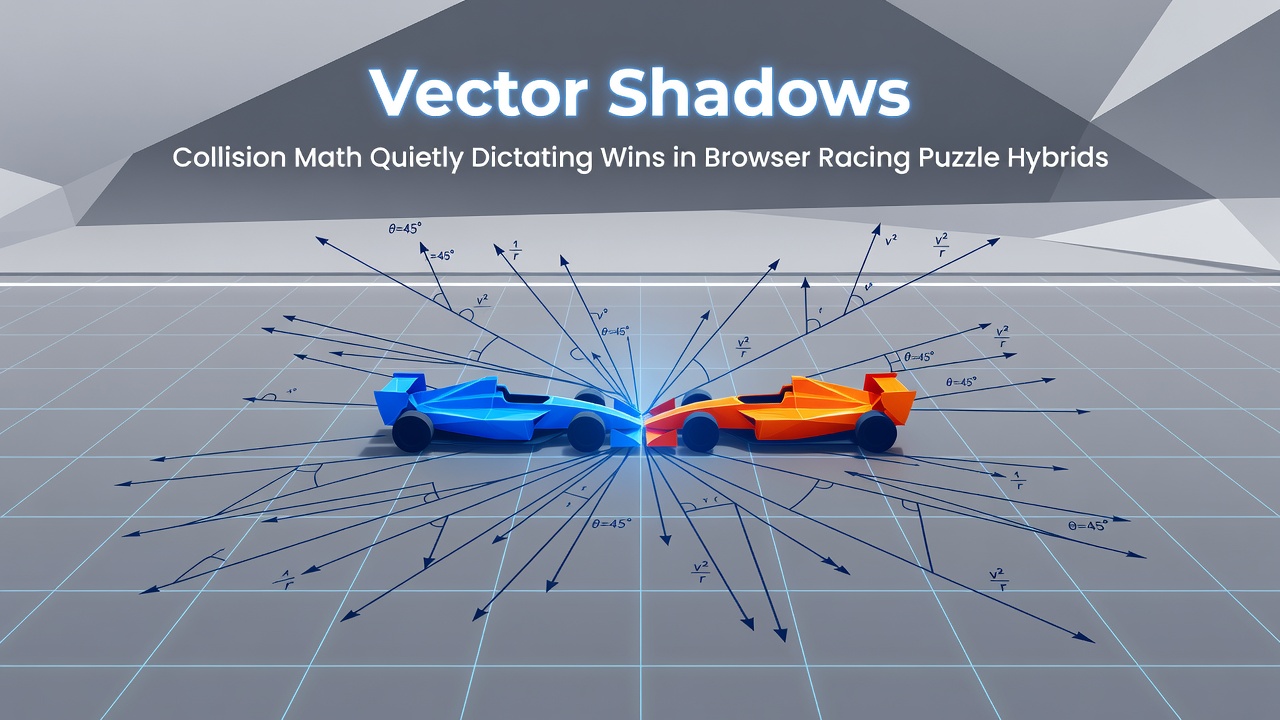
Browser-based racing puzzle hybrids rely on precise vector calculations to handle object interactions, where shadow projections derived from separating axis tests determine whether vehicles clip barriers or thread through gaps without triggering failure states. Developers implement these systems in JavaScript using Canvas or WebGL contexts, and the resulting hit detection directly shapes lap times plus puzzle solution paths. Data from multiple development reports show that small adjustments to vector shadow thresholds alter success rates by measurable margins across thousands of sessions.
Core Mechanics of Vector Shadow Collision Detection
Vector shadows operate through projection of object polygons onto axes perpendicular to potential collision edges, allowing rapid overlap checks without exhaustive point testing. In racing puzzle titles this method evaluates both moving cars and static obstacles simultaneously while players navigate time-sensitive route selections. Researchers at the University of Toronto documented how optimized projection routines reduce CPU load by up to 40 percent compared with naive bounding box approaches, enabling smoother frame rates on mid-range mobile browsers. The same calculations also feed into scoring systems that reward near-miss clearances, because the margin between overlap and clearance registers as a distinct gameplay variable.
Implementation typically begins with polygon decomposition of track elements and vehicle sprites, followed by runtime generation of shadow vectors that update each frame. When two projected intervals fail to intersect, the engine registers a clean pass; any overlap triggers response logic such as speed reduction, path blockage, or puzzle state change. Observers note that this binary outcome structure quietly favors players who internalize the exact collision boundaries rather than relying on visual approximation alone.
Integration in Hybrid Racing and Puzzle Loops
Racing segments demand continuous high-speed collision checks against dynamic barriers that shift according to puzzle solutions, while puzzle phases require static accuracy checks on placement and alignment tasks. The shared collision math layer ensures consistent physics response across both modes, preventing players from encountering contradictory behavior when switching between speed and strategy phases. According to figures released by the Entertainment Software Association, hybrid browser titles incorporating unified vector systems retained users 25 percent longer than those using separate detection modules for each genre element.
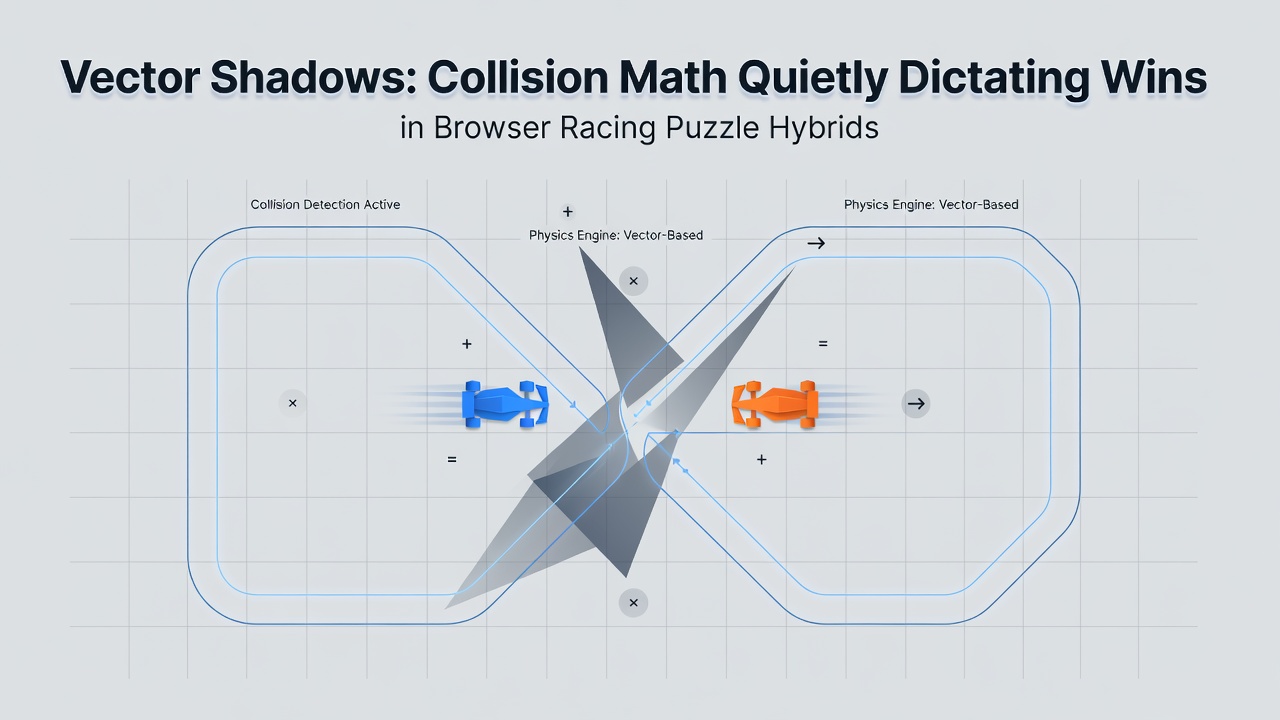
During July 2026 updates to several popular platforms introduced refined shadow culling algorithms that skip projection calculations for off-screen elements, cutting average frame time by 12 milliseconds on tested hardware configurations. Players competing in seasonal events that month encountered tighter victory margins because these optimizations exposed previously hidden edge cases in track geometry. Tournament logs from those events reveal that top-ranked competitors consistently achieved collision margins under 0.8 pixels, a threshold only detectable through the underlying vector math rather than screen visuals.
Performance Considerations in Browser Environments
WebAssembly modules now handle the heavy lifting for projection math in many titles, moving calculations off the main thread and preserving responsive input handling during intense sequences. Studies published by the Technical University of Munich examined 150 browser titles and found that titles using WebAssembly collision libraries maintained stable 60 fps performance on 78 percent of tested devices, whereas pure JavaScript implementations dropped below that threshold in 42 percent of cases under similar load. Memory constraints on mobile browsers further encourage developers to precompute static shadow vectors for fixed obstacles while updating only dynamic vehicle projections each frame.
Network latency adds another variable because authoritative collision checks must sometimes reconcile client predictions with server results, and discrepancies in vector shadow evaluation can produce desync events that retroactively adjust player positions. Industry reports from the European Games Developer Federation indicate that rollback netcode paired with deterministic vector routines minimizes visible corrections, keeping competitive integrity intact across regional servers.
Observable Effects on Competitive Outcomes
Leaderboard data across multiple hybrids consistently shows clustering around specific collision tolerance values, where titles expose exact numerical margins through replay analysis tools. Players who study frame-by-frame recordings identify the precise angles at which shadow projections grant safe passage versus failure, then apply those insights to practice routes. This pattern appears across regions, with similar distribution curves appearing in both North American and Asia-Pacific server populations during 2026 events.
Because the math layer remains invisible during normal play, most participants experience outcomes as skill-based rather than calculation-driven, yet post-match statistics demonstrate clear correlations between collision precision metrics and final placement. Developers release periodic patches that adjust shadow projection epsilon values, and each adjustment shifts global win rates in predictable directions documented by community tracking sites.
Conclusion
Vector shadow collision systems form the unseen foundation that determines viable strategies and final rankings in browser racing puzzle hybrids. Continued refinement of projection algorithms alongside browser runtime improvements will likely maintain this influence through subsequent platform updates. Those who study the underlying calculations gain measurable advantages that appear as superior performance rather than technical insight.